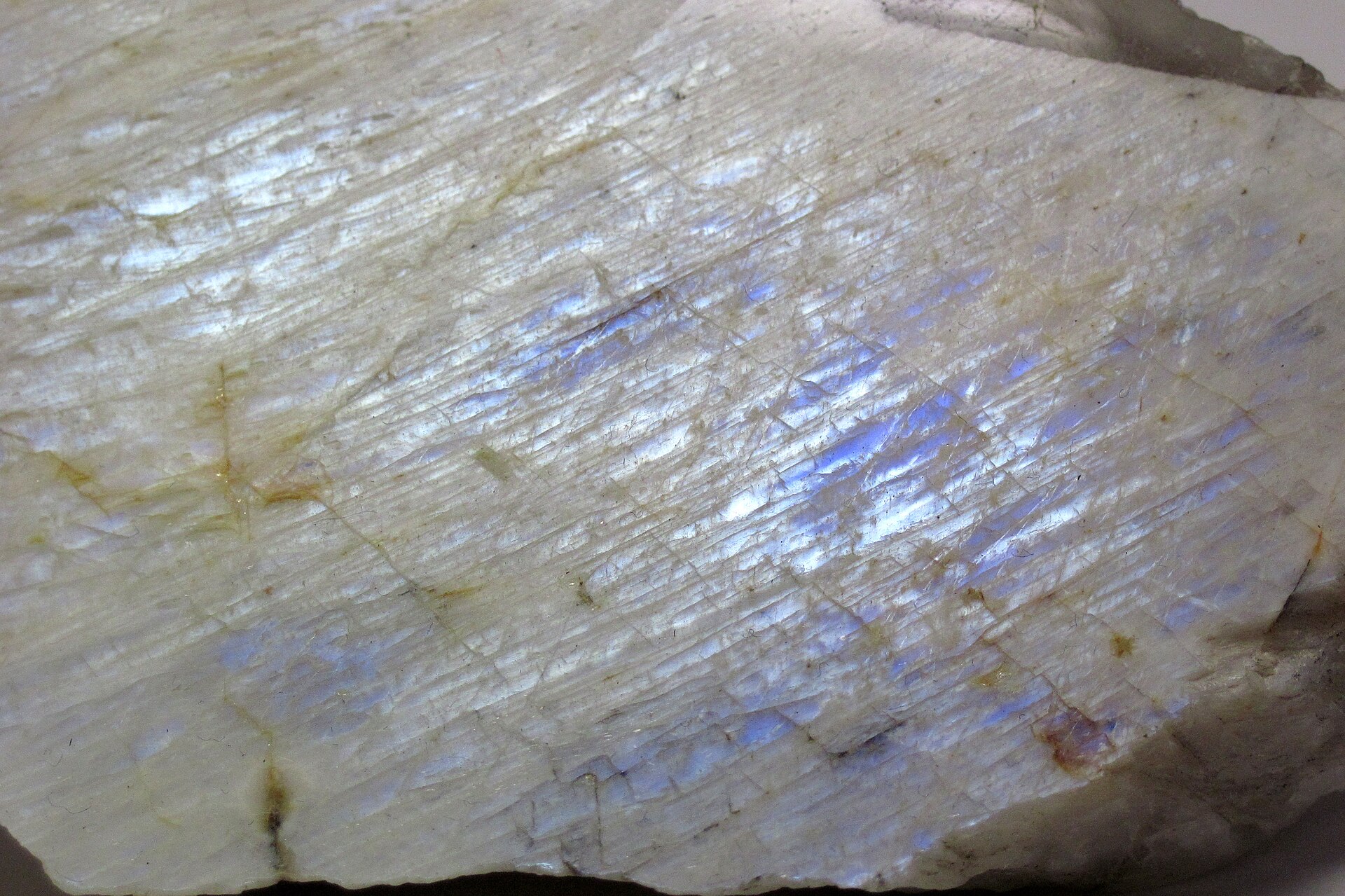
Moonstone is the stone that seems to hold a little of the night sky inside it. Tilt a good piece toward soft light and a milky glow floats across the surface like moonlight on water, then quietly slips away. That drifting sheen, called adularescence, is why moonstone has been treasured for thousands of years as a stone of intuition, cycles and gentle new beginnings. If that quiet shimmer has caught your eye and you want to understand the meaning behind it, here is a calm, practical guide.
What moonstone is
Moonstone is a variety of feldspar, the same mineral family as labradorite, and its trademark glow comes from light scattering between fine internal layers. Because the effect depends on the angle you hold it, the sheen appears to move as the stone turns, which is exactly why it feels so alive in the hand. Most pieces show a soft white or blue floating light, while rainbow moonstone flashes hints of peach, gold and violet across a paler body. It sits at 6 to 6.5 on the Mohs hardness scale, a little softer than quartz, which is worth remembering when you care for it. Moonstone is also the traditional June birthstone, a link that ties it neatly to the moon and its turning phases.
The meaning of moonstone
The meaning most traditions return to is intuition and the rhythm of natural cycles. It is the crystal people reach for during change: a new chapter, a fresh start, a season of growth when the path ahead is still taking shape. Long associated with the feminine, with dreaming and with quiet inner knowing, moonstone carries a calm, reflective feeling rather than a loud or forceful one. Folklore casts it as a tender companion for anyone in transition, learning to trust their instincts or stepping softly into something new.
Because it is so closely tied to intuition, moonstone is linked with the third eye and crown chakras, the energy centres connected with perception, insight and a sense of the bigger picture. In that respect it keeps good company with labradorite and amethyst, two other stones long connected with dreams, calm and the quiet mind. If you are new to the idea of energy centres, the wider practice of crystal healing offers a gentle way in.
Why people reach for it
People turn to moonstone for a few symbolic reasons.
- Intuition and reflection. Its floating sheen makes a natural point of focus, a way to soften the gaze and turn attention inward.
- New beginnings. It is the classic stone to keep close through a transition, a reminder that cycles end and begin again.
- Calm and dreaming. Many people keep a piece by the bed as a quiet invitation to rest and gentle sleep.
None of this is medicine. Moonstone is a symbolic and contemplative tool, a beautiful prompt for intention rather than a cure for anything. If something troubles your health or your mind, a doctor is the right place to turn.
How to work with it
The simplest way to begin is to sit with it. In low, moving light, let your eye follow the sheen as you breathe slowly; many people use that shimmer as an anchor for meditating with crystals, returning to the glow whenever the mind wanders. Carry a tumbled moonstone in a pocket or bag through a season of change, a small habit that fits neatly into the wider practice of carrying and wearing stones. Kept on a bedside table, a polished piece can serve as a soft reminder to slow down as the day closes.
If you like to give your stones a purpose, moonstone takes an intention beautifully. The tradition of programming an intention is simply holding the stone, naming what you are moving toward, and letting it stand for that quiet promise while you go about your day. As a calm, beginner friendly stone, moonstone is also a lovely early addition when you are building your first set, since it pairs so easily with the crystals many people already own.
Colour and light
Colour is a real part of the moonstone meaning. Classic white and blue moonstone lean into that cool, dreamy, intuitive character, while rainbow moonstone adds a brighter, more hopeful spark and peach moonstone carries a softer, warmer, heart centred note that sits well beside rose quartz. If the language of crystal colour interests you, moonstone is a rewarding stone to study, since a single piece can seem to hold several shades at once depending on the light. Moonstone is often sold paired with rose quartz, and I go through what that combination is actually for in rose quartz and moonstone.
Caring for moonstone
Moonstone is sturdy enough for everyday handling, but its softer hardness means a little care goes a long way.
- A quick rinse under cool water is fine, yet avoid salt water, scrubbing and long soaks, which can dull the delicate sheen over time.
- Keep it out of prolonged harsh sun to protect its glow.
To refresh it, moonlight suits it especially well, a fitting choice for a stone named after the moon; a rest on a selenite plate, a pass through cleansing smoke or the ring of a singing bowl work just as gently. These are the same simple methods covered in any good routine for cleansing and charging your crystals, so moonstone settles easily into a collection you already tend.
Who it suits
Moonstone suits anyone standing at a threshold: starting something new, learning to trust their intuition, or simply wanting a soft, reflective presence through a busy stretch. It pairs naturally with clear quartz for clarity, black tourmaline for grounding, and labradorite for its shared, dreamlike shimmer. More than most stones, it rewards patience. Turn it slowly, catch the light, and it is easy to see why moonstone has been called a keeper of moonlight for so long.