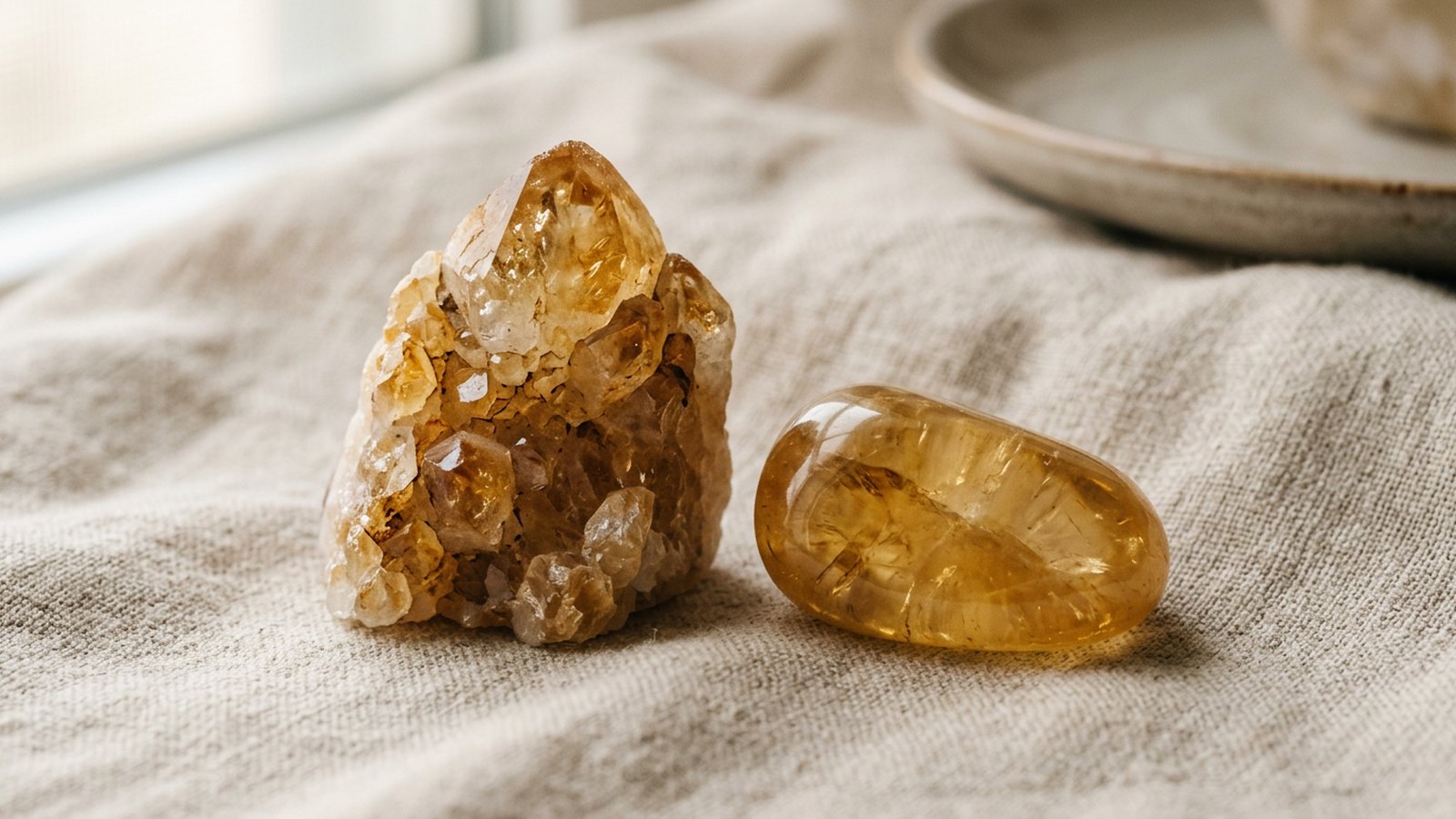
Citrine is a golden yellow to amber variety of quartz, and its meaning has long centered on light, joy, and abundance. Often called the stone of the sun, citrine is worked with to invite optimism, confidence, and a sense of flow into daily life. Its warm color links it to personal power and the solar plexus, which is why so many people reach for it when they want to feel brighter and more capable. If you are drawn to its honey glow, you are following a very old thread: citrine has been prized as a lucky, sunny stone for centuries.
This guide covers what citrine is, what it symbolizes, its link to the solar plexus chakra, and simple ways to use, cleanse, and charge it.
What Is Citrine?
Citrine is a yellow variety of quartz, made of silicon dioxide (SiO2). Its shades range from pale lemon and champagne to deep golden honey and amber, tones that give the stone its name. The word citrine comes from the old French citron and the Latin citrus, a nod to lemon and citrus fruit.
Like all quartz, citrine sits at 7 on the Mohs hardness scale, which makes it durable enough for rings, pendants, beads, and everyday carrying. Its warm color is generally attributed to traces of iron within the crystal structure, though the exact chemistry is more subtle than most crystal descriptions suggest.
Because it is a form of quartz, citrine is stable and water-safe for brief contact, so a quick rinse is fine. Prolonged soaking is never necessary, and long hours in direct sun can fade its color over time. Our guide on which crystals can go in water explains where citrine fits.
Citrine Meaning and Symbolism
The meaning of citrine is built around sunlight. Where many stones are tied to the moon and the quiet inner world, citrine belongs to the day: warmth, energy, and forward motion. It is traditionally seen as a stone of joy, optimism, and creative confidence, the kind of energy that helps you begin things and follow through. Worth knowing that citrine sits at the solar plexus rather than the sacral chakra, which is why our guide to crystals for creativity treats it as a willpower stone doing a shift in the imagination department.
Citrine also carries a strong association with abundance and success. This is not only about money but about a mindset of openness and possibility, a willingness to receive good things. That symbolism pairs naturally with the work in our guide on crystals for money and abundance, where citrine is a cornerstone stone.
Because its color sits near the warm end of the spectrum, citrine is often grouped with other stones of energy and drive. If you enjoy exploring how color shapes symbolism, our overview of crystal colours and their meanings puts citrine in wider context.
Citrine and the Solar Plexus Chakra
Citrine is one of the classic stones of the solar plexus chakra, known in Sanskrit as Manipura. This center sits above the navel and is linked to personal power, willpower, confidence, and a healthy sense of self. Its color is golden yellow, which is exactly why citrine is thought to resonate with it so strongly.
When the solar plexus feels balanced, the traditional teaching says you feel steady, motivated, and comfortable taking up space. People work with citrine here to support self-assurance and momentum. You can learn how each stone maps to its energy center in our chakra crystals guide, and if courage is your focus, our roundup of crystals for confidence sits close to citrine's core theme.
Citrine, the Merchant's Stone
One of citrine's oldest nicknames is the merchant's stone. Traders and shopkeepers were said to keep a piece of citrine in the cash box or register to encourage steady trade and good fortune. That old habit survives today, and many people still tuck citrine into a wallet, a drawer, or the wealth corner of a room.
If you want to try this, our guide on where to place crystals in your home suggests where a stone like citrine tends to feel most at home. As always, these are symbolic and traditional associations rather than guarantees.
Natural Citrine vs Heat-Treated Citrine
Here is the part most crystal guides skip, and it is worth knowing before you buy. True natural citrine is genuinely rare. A large share of the citrine sold today is heat-treated amethyst. When purple amethyst is heated to roughly 470 to 560 degrees Celsius, the iron in the crystal shifts and the color turns to yellow, orange, or deep amber.
In practice, natural citrine tends toward pale, smoky, or honey yellows, while heat-treated material often shows a stronger orange or reddish glow, sometimes with a whitish base where it was cut from a geode. Neither is fake quartz, and many people happily work with treated citrine, but it helps to know what you are holding. The amethyst connection is a lovely one to sit with, and you can read more in our amethyst meaning guide.
When the two colors occur together in one natural crystal, the result is called ametrine, a striking blend of violet and gold from the same piece of quartz. If you are thinking of using the two stones as a pair, see amethyst and citrine together. The other classic partner for citrine is pyrite, the action half of the same intention, and that duo comes with one physical rule worth knowing before you string them together: citrine and pyrite.
How to Use Citrine
Citrine is a friendly, low-fuss stone to work with. A few simple ways to begin:
- Carry or wear it. Keep a tumbled citrine in your pocket or wear it as jewelry to keep its bright energy near you through the day.
- Set it on your desk. Placed where you work or create, citrine is a gentle cue toward focus and optimism.
- Hold it during intention setting. Warm your citrine in your hands and name what you want to invite, then let the stone be a small daily reminder.
- Add it to a morning routine. Because citrine is a solar stone, many people like to greet it in the first light of the day.
For more starting points, our how to use crystals guide walks through the basics for any stone.
How to Cleanse and Charge Citrine
Citrine benefits from occasional cleansing to keep its energy feeling fresh. Gentle methods suit it well: smoke from dried herbs, sound, moonlight, or a quick rinse under cool running water. Our guide on how to cleanse and charge your crystals covers each option in detail.
To recharge citrine's warm, active quality, brief morning sunlight is a fitting choice that echoes its solar symbolism. Keep sun sessions short, though, since long exposure can gradually pale its golden color.
A Note on Citrine as a Birthstone
Citrine is one of the two birthstones of November, sharing the month with topaz (I explain how to tell the two apart, and why old "topaz" jewellery is often citrine, in citrine vs topaz), and it is also the traditional gemstone for a thirteenth wedding anniversary. That gives it a natural place in gifts meant to wish someone warmth, joy, and good fortune, which fits its symbolism neatly.
Bringing Citrine Into Your Life
Citrine's meaning comes down to light: optimism, confidence, and a welcoming attitude toward abundance. Whether you keep a piece on your desk, carry it as a small daily companion, or gift it for a November birthday, it is one of the most cheerful stones you can invite in. Start simple, notice how it feels to have that bit of sunlight nearby, and let citrine remind you to keep your outlook bright. Citrine is also the one stone named on every list of crystals for manifestation, if you want to set it to a specific goal rather than a general mood.
Citrine also has a quieter job worth knowing about: restoring the belief that trying again is worth it. I write about that, and the stones that pair with it, in crystals for motivation.