Meaning & symbolism
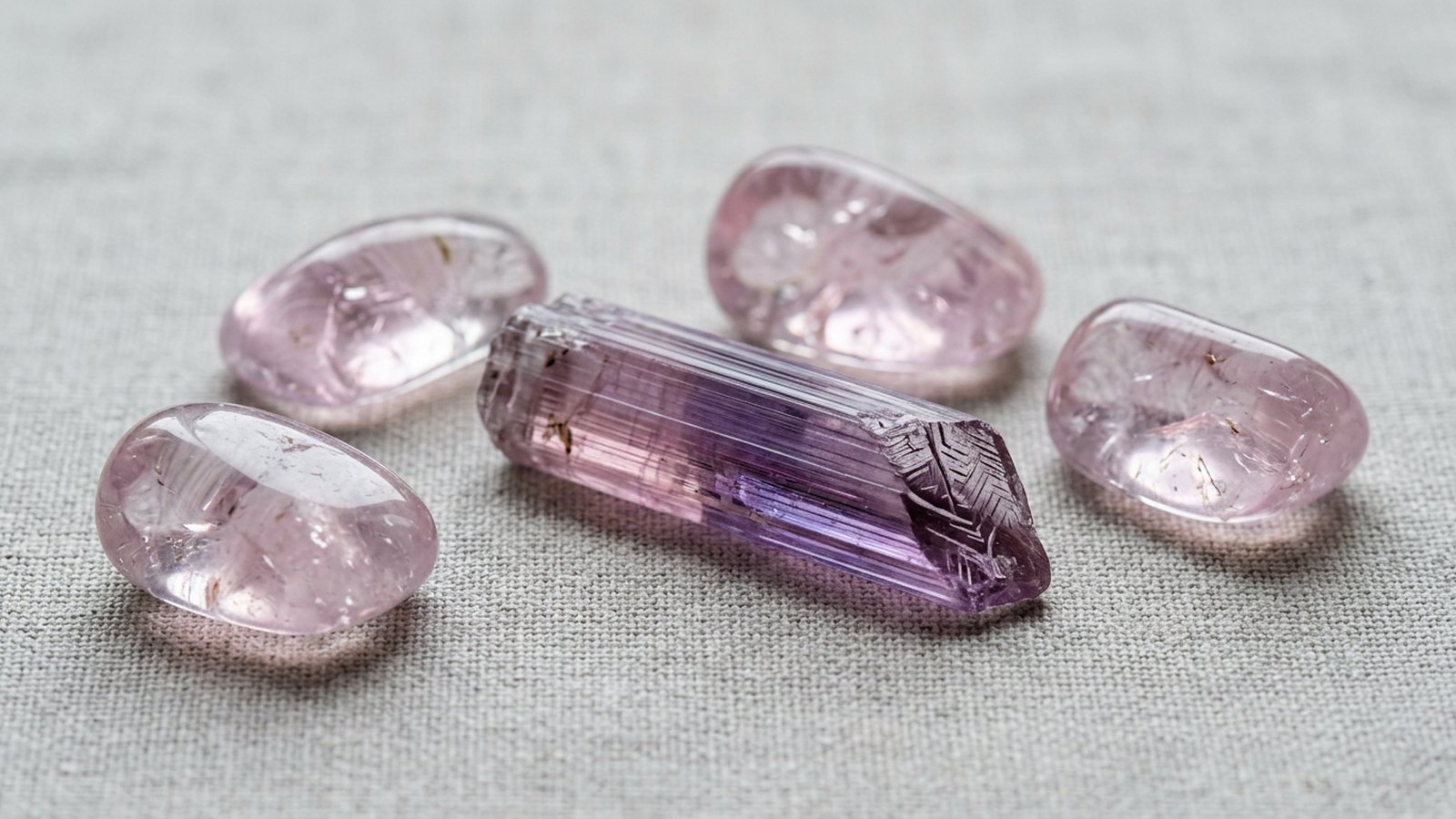
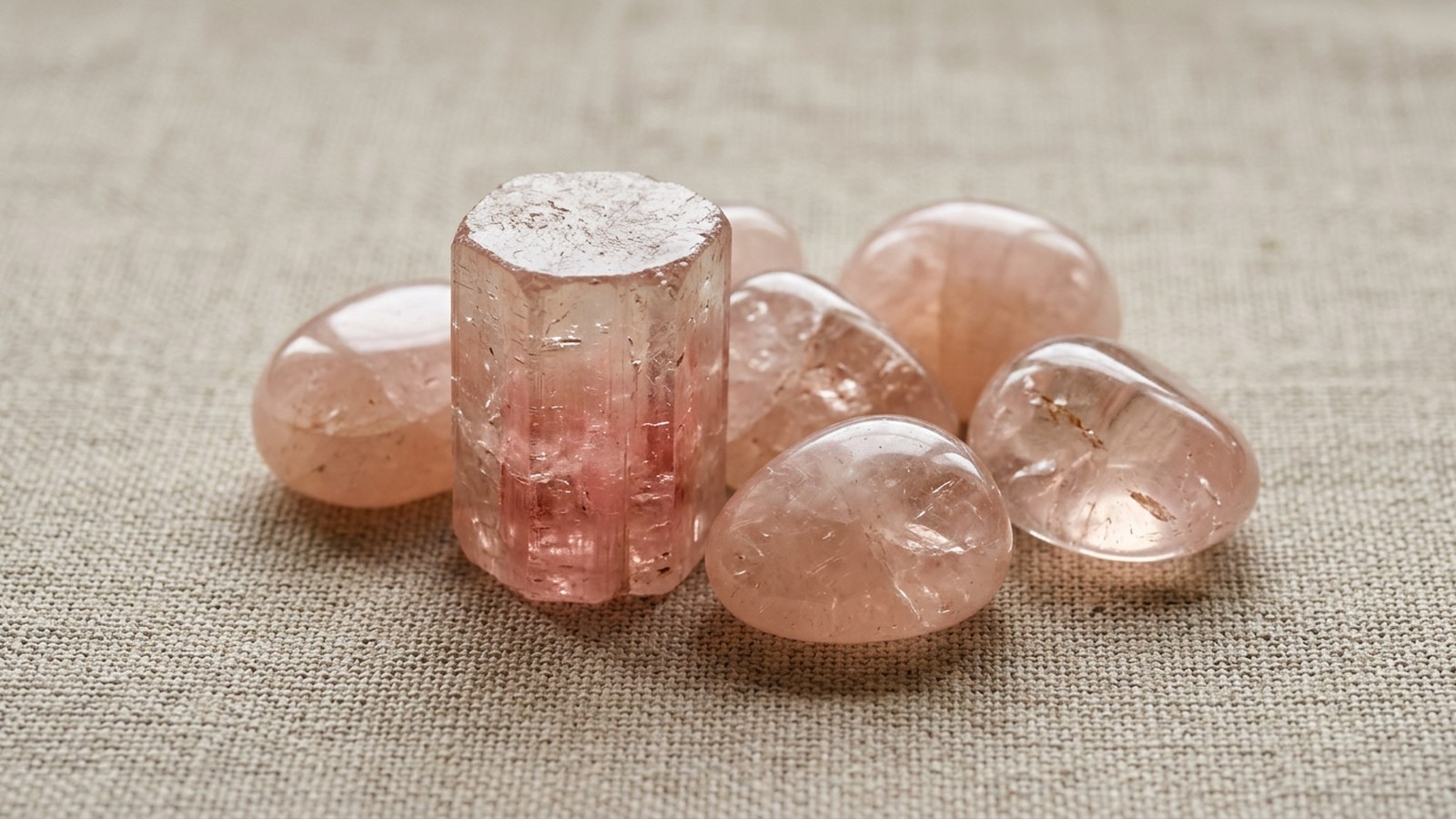
Morganite is pink beryl, a beryllium aluminium silicate of the hexagonal system, coloured by traces of manganese (Mn2+), often with a yellow or orange component that gives peach and salmon tones. It forms short, stubby six-sided prisms in lithium and caesium rich granite pegmatites, alongside kunzite, lepidolite, tourmaline, quartz and albite. Named on 5 December 1910 by George Frederick Kunz at the New York Academy of Sciences, in honour of J.P. Morgan, after a new find in Madagascar. The Rose of Maine (Bennett Quarry, Buckfield, 1989) is the most famous crystal. Main sources: Brazil, Madagascar, Mozambique, Afghanistan, Pakistan, Namibia, USA.
Healing properties
Geology
- Beryl, Be3Al2Si6O18, hexagonal
- Hardness 7.5 to 8, weak cleavage
- Refractive index about 1.58 to 1.59
- Pink from Mn2+, pleochroic
- Grows in lithium and caesium pegmatites
How to use it
Traditionally carried or worn over the heart for tenderness, self-kindness and repair in relationships, held during a few slow breaths when an old hurt resurfaces, or paired with rose quartz. Linked with the heart chakra. These are traditional uses, not medical advice.
Cleansing & care
Hard (7.5 to 8) and colour-stable in daylight. Clean in warm soapy water with a soft brush; it picks up skin oil and looks dull when greasy. Ultrasonic and steam usually safe for clean stones, avoid if fractured. Keep away from strong heat. Most morganite is heat treated, a standard and stable treatment. Store apart from softer stones.