Meaning & symbolism
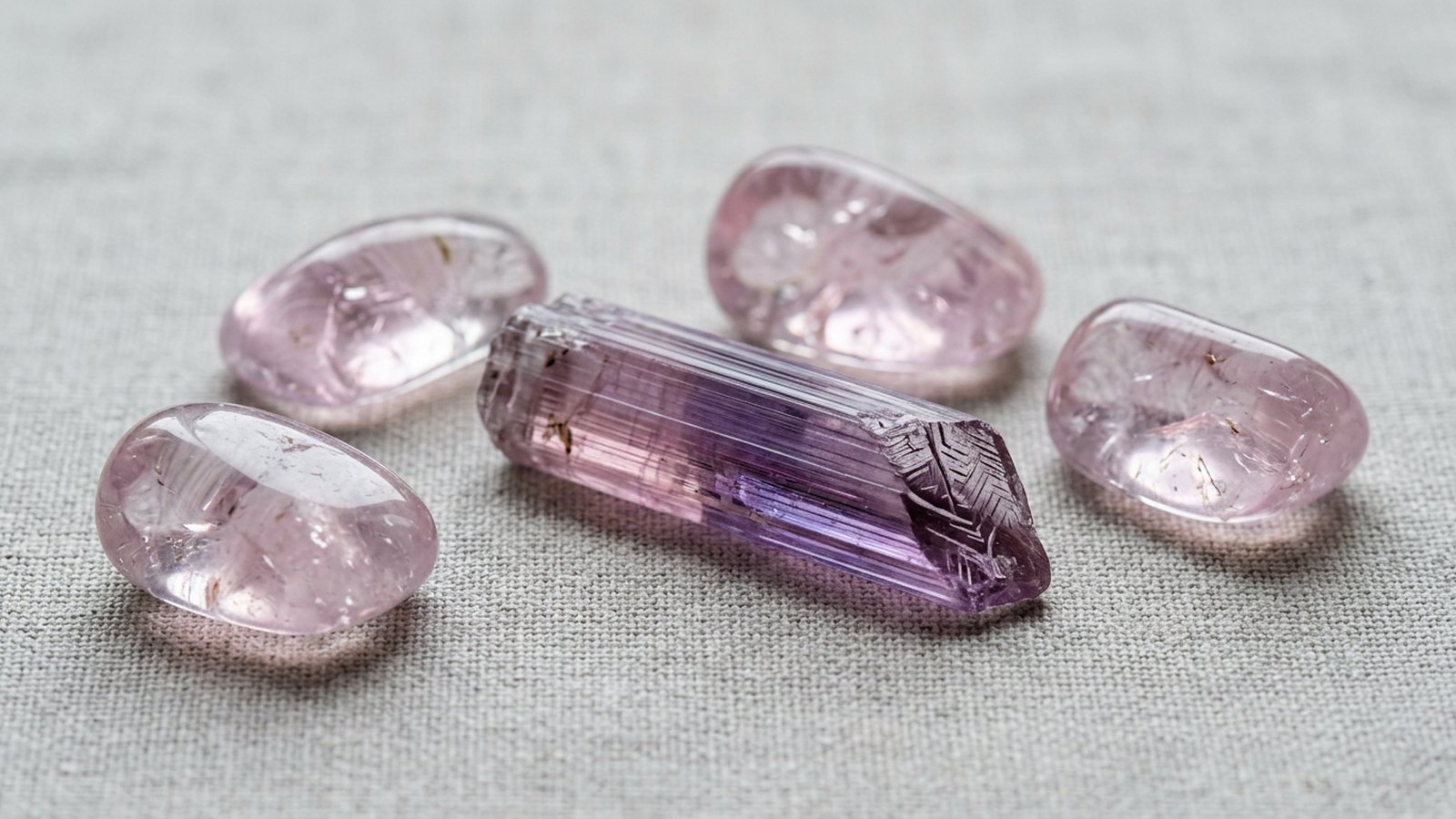
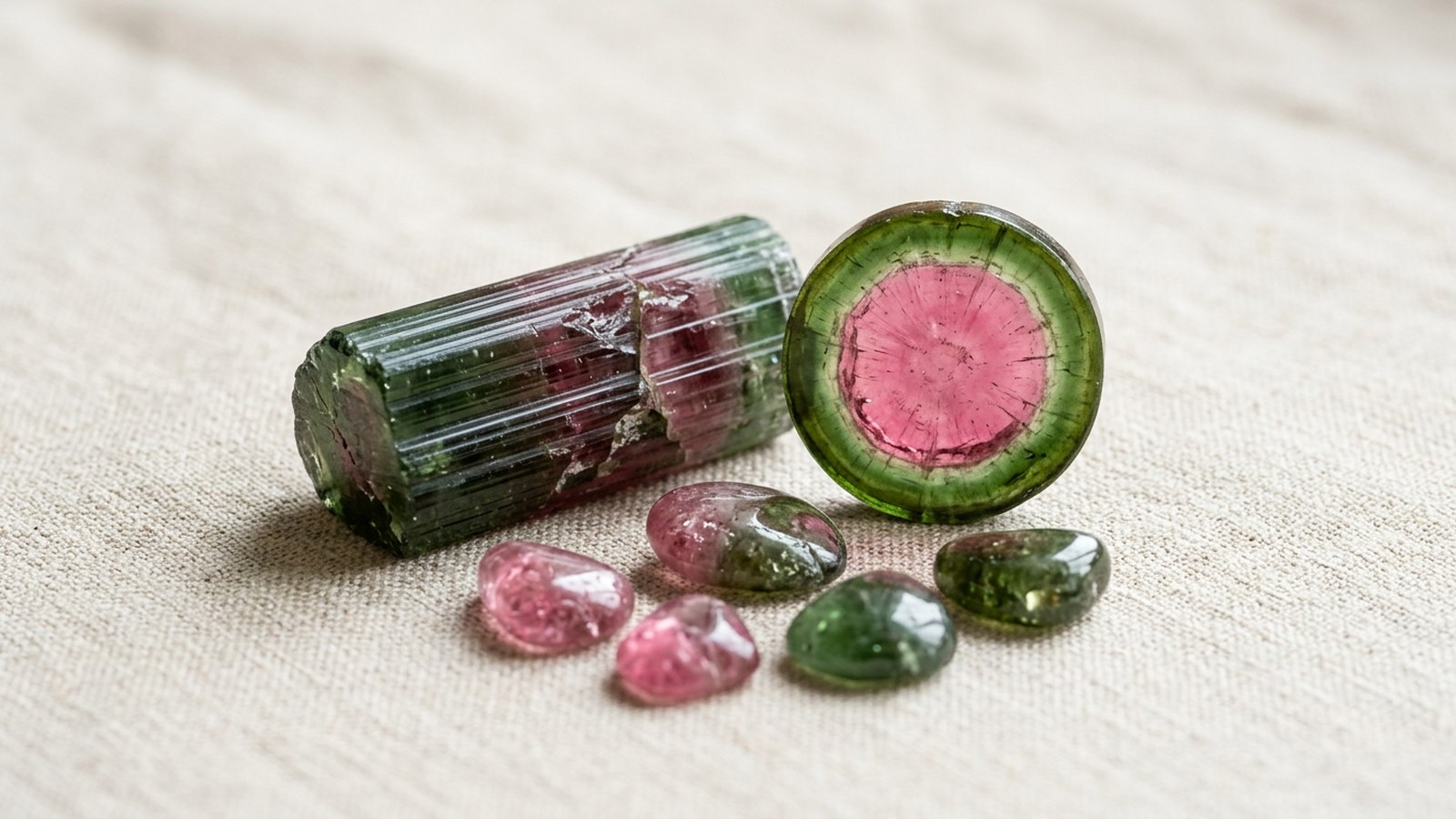
Tourmaline is a group of borosilicate minerals sharing one trigonal crystal structure. Schorl (black, iron rich), elbaite (lithium rich, most pink, green, blue and watermelon gems) and dravite (brown, magnesium rich) are the main species. Gem tourmaline grows in granite pegmatites with quartz, lepidolite and spodumene. It is a birthstone for October, with opal.
Healing properties
Geology
- Borosilicate mineral group, trigonal
- Elbaite about Na(Li1.5Al1.5)Al6(Si6O18)(BO3)3(OH)4
- Specific gravity about 3.0 to 3.25, strongly pleochroic
- Pyroelectric and piezoelectric
Traditional associations
- Protection and grounding
- Emotional balance and love
- October birthstone with opal
How to use it
Traditionally worn as jewellery, carried as a pocket stone, placed by the front door or held in meditation, choosing the colour by intention. These are traditional uses, not medical advice.
Cleansing & care
Mohs 7 to 7.5, no useful cleavage but can be brittle. Clean with warm soapy water, avoid ultrasonic cleaners, steam and sudden temperature changes, especially with included or fracture-filled rubellite. Pyroelectric, so it gathers dust under warm lights.
Questions & answers
Black tourmaline (schorl) is one member of the tourmaline group. The group also includes elbaite, which gives most pink, green, blue and watermelon gems, and dravite.